
 中文
 English
NJ Sequoia Industrial: Customized & Reliable Technology for Sulfuric Acid Production via Coke Reduction of Gypsum (Phosphogypsum, Flue Gas Desulfurization Gypsum, Manganese Residue, Titanium Gypsum, Nickel-Cobalt Gypsum & Other Industrial Gypsum Wastes) with Co-Production of Calcium Oxide or Cement Clinker
I. A Breakthrough Solution Amid Surging Sulfur Prices and Mounting Solid Waste Pressures
Meanwhile, China generates over 300 million tons of industrial by-product gypsum annually. Stockpiling such massive volumes not only occupies millions of mu of land but also poses severe risks of groundwater contamination.
This technology is listed as an encouraged project under Category XLII (Environmental Protection, Resource Conservation & Comprehensive Utilization) of the Catalogue for the Guidance of Industrial Structure Adjustment (2024 Edition). It is also designated as a core utilization route for phosphogypsum in the Solid Waste Comprehensive Treatment Action Plan, with sustained policy support for its industrial adoption.
II. Industrial Chain Transformation: From Isolated Cost Reduction to Eco-Chain Value Addition
Upstream Cost Stabilization
Downstream Closed-Loop Value Enhancement
Regional Economic Driving Force
III. Sequoia Customized Solutions: Leading Technology & End-to-End Full-Lifecycle Services
Industry-Leading Technical Indicators
Comprehensive One-Stop Service Portfolio
Benchmark International Cooperation
IV. Why Choose Sequoia: Decades of Practical Expertise to Secure Project Success
- Participated end-to-end in China’s first large-scale gypsum sulfuric acid & cement clinker co-production project for a top domestic manganese producer (initiated in 2012), pioneering the commercial large-scale application of this technology nationwide.
- Led the manganese residue desulfurization activation and sulfuric acid production project for the same leading manganese enterprise, which was fully commissioned and accepted in 2017 and has since become a national model for high-value utilization of industrial solid waste.
Our strategic collaboration with the leading nickel-cobalt group stands as definitive validation of our technical prowess and service reliability. Partner with Sequoia to build a robust foundation for sustainable growth within the circular economy landscape.
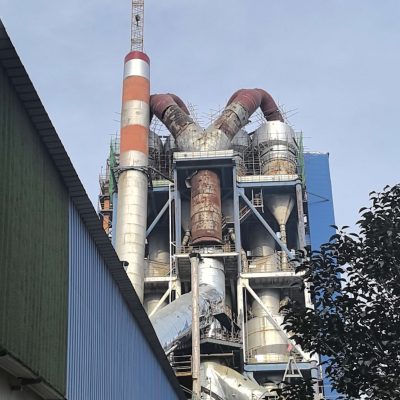
As of June 15, 2026, preheaters and other thermal process equipment have arrived on site.
Frequently Asked Questions
Q1: What is phosphogypsum to sulfuric acid process?
Phosphogypsum to sulfuric acid is an industrial process that converts waste phosphogypsum (CaSO4·2H2O) from phosphate fertilizer production into sulfuric acid and calcium oxide through high-temperature calcination at 1100-1400°C.
Q2: What is the investment cost for a 100,000 t/y plant?
A 100,000 ton per year phosphogypsum acid plant typically requires $8-15 million investment, with a payback period of 4-6 years.
Detailed Technical Q&A
Q3: What is the core chemical reaction mechanism of phosphogypsum decomposition?
The decomposition follows a two-stage Bogue reaction pathway. First, CaSO4 reacts with coke at 900-1000°C: CaSO4 + 2C → CaS + 2CO2. Then calcium sulfide reacts with remaining CaSO4 at 1100-1300°C: CaS + 3CaSO4 → 4CaO + 4SO2. The optimal temperature window is 1150-1250°C — below 1100°C the reaction is kinetically limited, above 1300°C the melt phase causes kiln ring formation. Silica and alumina in the feed act as mineralizers, lowering decomposition temperature by 50-80°C through liquid phase sintering.
Q4: How does Sequoia’s process handle different gypsum types?
Each gypsum type requires tailored parameters. Phosphogypsum (P2O5 < 0.5%) needs pre-calcination at 400-500°C to remove free water and fluorine impurities. Titanium gypsum (Fe2O3 ~3-5%) requires reduced coke ratio (12-15% vs 15-18%) to avoid over-reduction. FGD gypsum (>95% CaSO4) produces SO2 at 12-14% concentration, allowing direct contact with sulfuric acid absorption without adjustment.
Q5: What is the energy balance vs traditional sulfur-burning process?
Gypsum decomposition is endothermic (~2.8 GJ/t CaSO4) while sulfur combustion is exothermic (~10 GJ/t S). However, the CaO product displaces ~1.2 t/t of limestone for cement clinker, which itself requires ~3.5 GJ/t calcination energy. Net energy balance is roughly neutral when integrated with a cement plant, with ~0.4 t CO2/t product reduction vs sulfur-based acid plus separate limestone calcination.
Q6: What are common operational challenges and solutions?
Three main challenges: (1) Kiln ring formation — solved by refractory coating control and optimized burner geometry, maintaining 15-20mm stable coating. (2) SO2 concentration fluctuation — solved by 3-day blending stockpile and automated fuel ratio control within ±2%. (3) Phosphorus passivation — soluble P2O5 causes cement setting retardation, solved by two-stage calcination at 600°C to convert soluble P2O5 to insoluble alpha-Ca3(PO4)2, reducing setting delay from 4-6 hours to <30 minutes.





Comments (0)