
 中文
 English
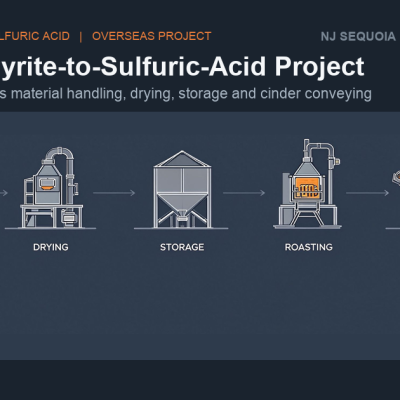
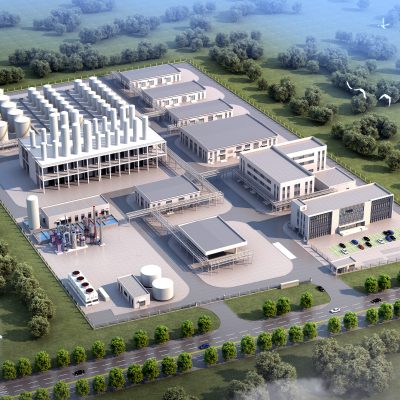
NJ Sequoia (Nanjing Sequoia Industrial Technology Co., Ltd.) has completed the process design of an overseas pyrite-to-sulfuric-acid project in cooperation with a Chinese engineering partner. The scope covers raw material handling, drying, storage and cinder conveying, and is delivered through design clarification, deliverable handover, on-site technical exchange, construction support and warranty service.
Project overview: the front end decides whether the plant runs
The mainstream route for sulfuric acid from pyrite is: fluidized-bed roasting, gas cleaning, gas drying with concentrated sulfuric acid, catalytic conversion with double absorption, and absorption. The roaster performs well only when the feed is consistent in particle size, moisture, sulfur grade and feed rate. Any deviation shows up almost immediately as a change in SO2 concentration in the roaster gas, in bed temperature, and in the load carried by downstream gas cleaning.
Raw material handling, drying, storage and cinder conveying sit outside the visible process chain, yet they set the availability and the operating cost of the whole plant. China’s Ministry of Ecology and Environment lists raw material transport, screening, crushing, drying and slag transport as the key control points for pyrite-based sulfuric acid production in its Technical Policy for Pollution Prevention in the Sulfuric Acid Industry, which is precisely the group of links this project was designed around.
Two different drying steps exist on one plant and are easily confused. Raw material drying sets the moisture of the feed entering the roaster; gas drying removes water vapour from the process gas with concentrated sulfuric acid before conversion. They differ in heat source, medium and interlock logic, and have to be designed separately.
Scope and division of work
NJ Sequoia led the process design, while the engineering partner delivered discipline-specific design against the process conditions issued by NJ Sequoia. The boundary between the two is written down rather than assumed, so that late process changes do not surface as site rework.
- NJ Sequoia: process route selection; mass and heat balance; key equipment process parameters; P&IDs and process description; design clarification; deliverable handover; on-site technical exchange; construction and commissioning support; warranty support after handover.
- Engineering partner: civil, structural, electrical, instrumentation and utility design executed against the agreed process conditions.
- Interface management: process condition sheets, equipment data sheets, utility consumption figures and a discipline interface list form the working boundary between the two parties.
Raw material handling: continuity first, blockage last
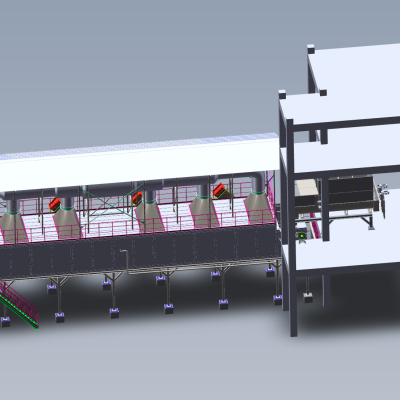
Pyrite, either concentrate or lump ore, is unloaded, received, crushed and screened, de-ironed and weighed before it reaches the roaster. What matters in design: reception hopper volume matched to the unloading rhythm; dust extraction and sealing at every transfer point; chute angles, wear liners and anti-blocking geometry selected against the actual particle size and moisture; magnetic separators and metal detectors to protect the crusher; and a weighing feeder interlocked with the roaster so that feed rate can follow bed temperature and SO2 concentration.
Raw material drying: holding moisture inside the roaster window
Excess moisture in the feed removes useful heat from the bed, raises the water vapour content and the dew-point corrosion risk in the gas train, and causes fine material to stick and block in chutes and bins. The economics of drying are decided by the heat source: waste-heat steam or hot air recovered from the roaster gas is used first, so that no additional fuel is burnt for drying. The dryer outlet moisture is set to the roasting requirement agreed with the client, with dust collection on the dryer exhaust and temperature interlocks against overheating and dust emission.
Storage: capacity is a balance, not a maximum
Bin volume is set by three variables together: the transport cycle, whether sea shipment batch or road delivery frequency; daily consumption; and the safety stock the owner is willing to carry. Overseas projects add a fourth: a long sea transit means long stockpile residence time, so the stockpile area needs rain and moisture protection, controlled pile height and residence time to limit oxidation and caking, and first-in-first-out withdrawal to prevent material sitting in one corner for months.
Cinder conveying: turning the residue into a saleable product
Roaster cinder from pyrite is essentially iron oxide. After cooling it is conveyed by scraper, bucket elevator or enclosed belt to a cinder bin, and can be sold to cement plants as an iron corrective material or used as an iron-making feedstock. This is what distinguishes the pyrite route from the sulphur route in terms of resource utilisation. Design points: wear- and heat-resistant equipment selection; fully enclosed conveying with dust suppression; cinder bin sized to the dispatch rhythm; and temperature and moisture control before loading.
Three additional constraints on overseas projects
- Codes and standards: design follows the host country codes and the owner requirements, while key equipment is specified so that international standards and Chinese fabrication practice do not conflict on the same data sheet.
- Logistics and spare parts: the spare parts list and delivery batches are back-scheduled from the sea transit time, so that long-lead items are locked early instead of holding up erection.
- Site conditions: high ambient temperature, heavy rainfall, high humidity or an unstable grid constrain electrical selection, corrosion protection class and the choice of drying heat source, and are settled at the basic design stage rather than on site.
Delivery and quality control by milestone
The design plan is the schedule baseline and deliverable acceptance is the quality gate: basic design, detailed design, design clarification, construction support, commissioning and performance test support, and warranty service. Each gate has a defined deliverable and a named approver, so that done means accepted rather than merely issued.
Frequently asked questions
What does the process design of a pyrite-based sulfuric acid plant cover?
It covers process route selection, mass and heat balance, key equipment process parameters, P&IDs and process description, utility consumption, and the process conditions for safety and environmental protection, plus design clarification and technical support during construction and commissioning. Raw material handling, drying, storage and cinder conveying form the materials-handling package within that scope.
Why must pyrite be dried before roasting?
Moisture takes useful heat out of the bed, raises water vapour content and dew-point corrosion risk in the gas train, and makes fine material stick and block in chutes and bins. Controlling feed moisture is what keeps bed temperature stable and feed continuous.
What happens to the cinder?
Cinder is mainly iron oxide. Once cooled and conveyed to the cinder bin it can be sold to cement plants as an iron corrective material or used as an iron-making feedstock. The conveying system is designed to stay enclosed, continuous and measurable under hot and abrasive conditions.
How does an overseas project differ from a domestic one?
Mainly in three areas: code system, logistics and spare parts strategy, and site conditions. Overseas work also involves document language and approval flows, interfaces with the owner engineer or third-party reviewer, and the delivery schedule of long-lead equipment.
What support does the designer provide during construction and commissioning?
Design clarification and technical briefing, on-site technical exchange, handling of design changes during construction, technical support through commissioning and performance testing, and warranty support after handover.
Talk to us about your project
If you are developing a pyrite-based or gypsum-based sulfuric acid project, or a cement kiln co-processing project, NJ Sequoia can provide process design and on-site support from concept to handover. Contact us at sales@sequoiaindustrial.com or +86 177 0158 2266.




Comments (0)