2022年11月17日,由工信部委托中国建材联合会在京组织召开中国建材行业碳达峰推进大会,宣布行业2030年前碳达峰行动全面启动。南京红杉作为中国大陆建材行业的一份子,始终遵循《巴黎协议》地球升温控制在1.5°C的要求,并将其确立为公司绿色低碳、能源转型的新地平线。为此,红杉以热情拥抱的态度,积极投身开展各项绿色可持续行动。
红杉高度重视可持续发展,注重生态平衡的改善。
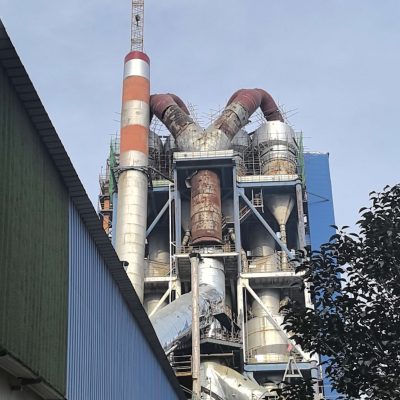
现如今,各行业领先工业技术的创新使用,为减少水泥行业对生态环境的环境影响提供了巨大的潜力。 凭借Sequoia Industrial 的工艺技术,减少粉尘排放、减少化石燃料的使用、回收真正的资源以便在工艺中再利用或进入市场流通都成为现实。
为此,Sequoia 在如下方面做出了积极的努力:
- 积极开发替代燃料预处理技术,推进替代燃料在水泥、热电行业的应用
- 开发低氮燃烧技术及高效脱硝技术(HiSNCR、SCR等),以减少使用尿素、氨水等还原剂的用量
- 开发应用了替代燃料预处理过程的粉尘控制设备及工艺,以减少粉尘的无组织排放,有效优化了操作现场的环境,控制了环境着火/爆炸风险
- 积极投身富氧/纯氧燃烧的开发应用
- 开发电石渣悬浮煅烧制备石灰生产线,大规模推进替代原料的利用,减少过程碳排放
- 开发了二水石膏基固体废物制备CaO/熟料的生产线,并率先在国外实施应用。
- 积极开发高固废掺入比例的水泥,为无废城市建设贡献“红杉力量”
On November 17, 2022, the China Building Materials Industry Carbon Peaking Promotion Conference, commissioned by the Ministry of Industry and Information Technology and organized by the China Building Materials Federation, was held in Beijing. At the conference, it was announced that the comprehensive launch of the industry’s carbon peaking action by 2030 had officially kicked off. As an integral part of China’s building materials industry, Nanjing Sequoia has always complied with the requirement of limiting global temperature rise to 1.5°C as set out in the Paris Agreement, which has been established as the new benchmark for the company’s green low-carbon development and energy transition. To this end, Sequoia has embraced the initiative with enthusiasm and actively engaged in various green and sustainable actions.
Nanjing Sequoia attaches great importance to sustainable development and focuses on improving ecological balance.
Nowadays, the innovative application of leading industrial technologies in various sectors has unlocked enormous potential for reducing the environmental impact of the cement industry. Leveraging the proprietary process technologies of Sequoia Industrial, it has become a reality to cut dust emissions, reduce the consumption of fossil fuels, and recover genuine resources for reuse in production processes or circulation in the market.
To this end, Sequoia has made proactive efforts in the following aspects:
- Actively developing alternative fuel pretreatment technologies and promoting the application of alternative fuels in the cement and thermal power industries.
- Developing low-nitrogen combustion technologies and high-efficiency denitrification technologies (such as HiSNCR and SCR) to reduce the dosage of reducing agents like urea and ammonia water.
- Developing and applying dust control equipment and processes for the alternative fuel pretreatment stage, thereby reducing unorganized dust emissions, effectively optimizing the operating site environment, and mitigating the risks of environmental fire and explosion.
- Devoting itself to the development and application of oxygen-enriched/oxy-fuel combustion technologies.
- Developing calcium carbide slag suspension calcination production lines for lime preparation, vigorously promoting the utilization of alternative raw materials, and cutting carbon emissions during the production process.
- Developing production lines for preparing CaO/clinker from dihydrate gypsum-based solid waste, and taking the lead in implementing and applying such technology overseas.
- Actively developing cement with a high proportion of solid waste incorporation, contributing “Sequoia’s strength” to the construction of zero-waste cities.
Frequently Asked Technical Questions
Q1. What are the real emission benchmarks a cement retrofit must target in 2026?
Stack targets under China’s ultra-low-emission policy (and aligned with EU Industrial Emissions Directive best practice) are: particulate ≤10 mg/Nm³, SO₂ ≤35 mg/Nm³, NOx ≤50 mg/Nm³ (some regions ≤10 for high-dust SCR), Hg ≤0.03 mg/Nm³, and dioxins ≤0.1 ng TEQ/Nm³. On CO₂, a modern line is ~0.70–0.85 t CO₂/t-clinker; Sequoia’s retrofits target 5–15% reduction through thermal efficiency and fuel substitution. Alternative-fuel thermal substitution rates of 30–60% are routinely achievable with moving-floor storage and pre-crushed RDF.
Q2. How is alternative-fuel storage handled safely for dust and fire?
RDF/SRF is stored in moving-floor (walking-floor) buffer bins with inertized transfer, dust extraction to a baghouse (outlet ≤10 mg/Nm³), and CO/CH₄ monitoring interlocked to dosing at <25% LEL. Walking-floor discharge prevents compaction and self-heating pockets; floor reciprocation rates are tuned to 2–6 m³/h per module. Inert gas (N₂) injection and temperature monitoring are specified for high-biomass streams; the same philosophy as FLSmidth/Polysius AFR storage.
Q3. What role does solid-waste co-processing play in circularity?
Cement kilns are natural waste-to-resource reactors: the high-temperature (1450 °C meal / 2000 °C flame) and long residence time destroys organics, the alkaline bed neutralizes acid gases, and the ash becomes part of clinker. Sludge (dewatered to 20–30% DS), biomass, waste-derived solvents and some hazardous streams displace coal and limestone. Sequoia packages low-temp sludge drying (40–90 °C, evaporative intensity ~5–15 kg H₂O/(m²·h)) plus cement-kill co-processing, closing the loop on industrial residues.
Q4. How does VSEP membrane support zero liquid discharge (ZLD)?
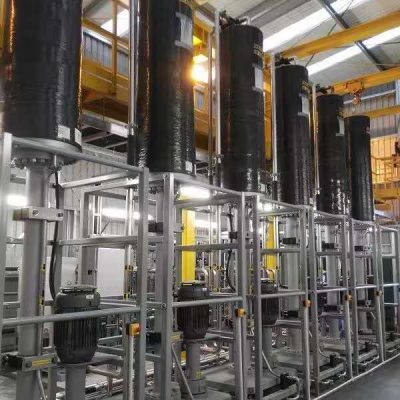
Landfill leachate and high-TDS brine are concentrated by vibratory-shear membrane (VSEP) to reduce evaporator load 3–8×, cutting MVR crystallizer energy from ~60–80 kWh/m³ to ~10–20 kWh/m³ on the membrane step, with permeate reuse and minimal reject. Shear at the membrane face (~hundreds of Pa, 50–60 Hz vibration) suppresses concentration polarization, letting flux hold 20–60 LMH at 20–60 bar without rapid fouling — the GE/SUEZ benchmark against which Sequoia pilots and supplies skids.
An expert in pyroprocess and solidwaste recovery . Responsible for the Marketing and Support of Sequoia Industrial with over 14 years in this field. I am determined that our sustainable products and services will be at the forefront of the solution for the generations to come.

 中文
 English






Comments (0)