
 中文
中文 English
In 2025, China’s cement industry forged ahead amid mounting pressures driven by shrinking market demand and falling product prices. Leveraging the anti-involution regulatory policies as a core initiative, the sector pressed forward with production capacity governance, expedited green and low-carbon transition alongside global business layout, and steered the industry away from price and volume cutthroat competition toward high-quality development centered on quality improvement and efficiency gains.
Policy & Capacity Governance Overview
Guided by the anti-involution policies, the cement industry is pushing ahead with capacity reduction initiatives to establish a new equilibrium between supply and demand, restore orderly competition within the sector, and bring product prices and corporate profits back to reasonable ranges.
On July 1, 2025, the China Cement Association issued the Opinions on Further Promoting High-Quality Development via Anti-Involution and Stable Growth in the Cement Industry. The core requirement of this document is to align the filed production capacity of clinker production lines with their actual operational capacity; any excess capacity beyond the officially filed quota must be supplemented with eligible capacity replacement quotas in strict accordance with the Measures for the Implementation of Capacity Replacement in the Cement and Glass Industries (2024 Revision).
This regulatory drive took initial shape at the end of 2024 and gained remarkable momentum throughout 2025. As the industry slipped into a downward economic cycle, new capacity expansion projects slowed drastically, and a large number of proposed projects were canceled or suspended, which diluted the capacity reduction effect brought by conventional capacity replacement mechanisms. Against this backdrop, mandating supplementary quota filings for existing operational capacity serves as a critical complementary measure to advance overall capacity decommissioning.
Divergent Strategic Priorities for Cement Manufacturers
For manufacturers with superior geographic location advantages and robust local market conditions, securing supplementary capacity quotas has become their top priority at present.
In regions where local cement production and sales have long maintained a balanced state, adding extra capacity quotas is no longer economically viable. For enterprises in such areas, the overriding priority lies in optimizing production lines to operate at the optimal balance point of energy consumption, heat consumption and output.
Industry Pain Point & Our Core Technology
This has generated widespread demand for flexible output modulation of cement calcination systems across the industry, yet retrofitting traditional equipment to realize such adjustable output proves technically challenging.
Sequoia has deployed its adjustable kiln inlet chamber constriction structure in multiple projects covering cement production and non-ferrous metal smelting sectors.
Online dynamic adjustment of the kiln inlet chamber constriction enables precise balancing of tertiary air and secondary air volume, stabilizes rotary kiln operating conditions, and eliminates material collapse risks during low-load kiln operation.
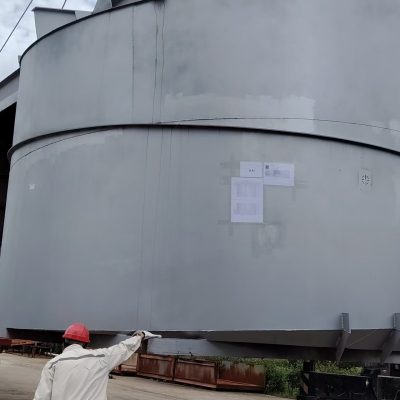
On-site photo of an in-service project commissioned in 2021
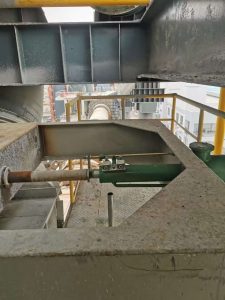
Adjustable Kiln Inlet Chamber
Adjustable Arc Gate for Kiln Inlet Chamber in Cement Industry
Should you require technical transformation services for your calcination system, please feel free to contact us.



Comments (0)