
 中文
中文 English
This document elaborates on VSEP from the perspectives of technical mechanism, application scenarios, core strengths and field application cases.
1. Technical Principle
Core Working Mechanism
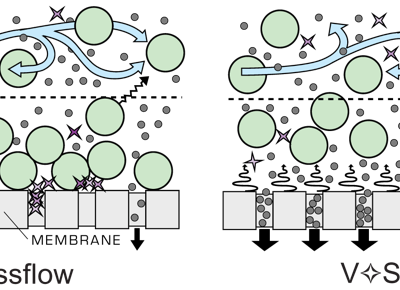
This strong shear force disrupts the stagnant boundary layer on the membrane surface and prevents adhesion of colloids, crystals and suspended solids.
Under continuous vibration, suspended substances form a floating layer above the membrane surface and are carried away by cross flow, stabilizing consistent filtration flux and eliminating the need for complicated pre-treatment processes.
Membrane Material & System Configuration
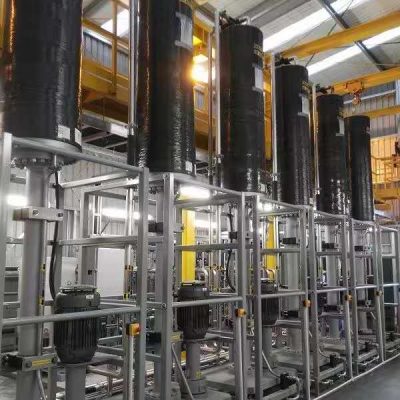
The system adopts a modular structure. A single module provides a membrane area of 2,000 square feet (~185 ㎡) while occupying only 20 square feet of floor space. Multiple modules can be operated in parallel to accommodate large-volume treatment demands.
2. Core Advantages
Outstanding Anti-Fouling Performance
No chemical pre-treatment (e.g., anti-scalant dosing) is required; the system can run stably with simple pH adjustment such as lime addition.
High Efficiency & Exceptional Recovery Rate
Its filtration flux is 5 to 15 times higher than traditional membrane setups, with a single module handling flow rates ranging from 5 to 200 gallons per minute.
Cost-Effectiveness & Full Automation
The whole system is fully automated under PLC control with minimal manual intervention, and supports Clean-in-Place (CIP) online cleaning.
3. Main Application Fields
Industrial Wastewater Treatment
- Acid Mine Drainage (AMD)
Removes heavy metals (copper, lead, arsenic, etc.) and sulfate ions. Treated effluent complies with EPA discharge standards (e.g., arsenic ≤ 0.05 ppm). Field projects achieve a 97% recovery rate in a single filtration pass.
- Landfill Leachate
For leachate featuring ultra-high COD and TDS, combined RO-VSEP treatment reduces TDS from 26,000 mg/L down to 55 mg/L. Representative references include El Bordo Poniente Landfill in Mexico and Buga Landfill in Colombia.
- Other Industrial Wastewater
Applicable to chemical wastewater, electroplating wastewater, food processing wastewater, etc., for efficient removal of BOD, COD, heavy metals and suspended solids.
Water Resource Reclamation & Reuse
- Cooling Tower Blowdown
Recovered water can be reused as makeup water for circulating cooling systems, with a recovery rate of 75%–90% and reduced freshwater intake.
- Boiler Feed Water Preparation
Eliminates hardness, silica and dissolved solids, replacing multi-stage conventional processes including lime softening and ion exchange to lower energy and chemical consumption.
- Municipal & Agricultural Water Supply
Removes colloids, bacteria and organic matter from surface water and well water. A bottled water project in Yemen lifted the water recovery rate from 60% to 92%.
Process Fluid Concentration & Purification
- Food & Beverage Industry
Recovers residual beer at the bottom of fermentation tanks to cut product loss by 3%–5%; concentrates whey protein and processes wine pomace while preserving original flavor profiles.
- Chemical & Material Manufacturing
Concentrates PVC latex from 38% solid content to 55%–68%; thickens pigments such as titanium dioxide and calcium carbonate; recovers coating materials from papermaking wastewater and reduces energy consumption in subsequent drying units.
- Biofuel Production
Treats fermentation waste liquid from ethanol production, separates solid residues and improves distillation efficiency.
4. Typical Project Performance Data
| Application Scenario | Treatment Outcome |
|---|---|
| Mine Wastewater | Copper concentration reduced from 186 ppm to < 0.1 ppm; sulfate from 8,000 ppm to 100 ppm; recovery rate 97% |
| Landfill Leachate | COD lowered from 10,241 mg/L to 17 mg/L; TDS reduced from 26,595 mg/L to 55 mg/L |
| Beer Recovery | Recovers beer from fermentation tank bottoms at a flux of 38 GFD (Gallons per Foot per Day) without damaging yeast cells |
| Cooling Tower Blowdown | TDS removal efficiency > 95%; recovery rate 80%; single module capacity 5,000 barrels per day |
5. Conclusion
Thanks to its modular design and automatic operation, VSEP can be seamlessly integrated into existing production lines to slash operational costs and environmental risks, especially for the most challenging difficult-to-treat fluid streams.
Please feel free to contact us for project consultation and technical inquiries.
Key Terminology Consistency Note



Comments (0)